-Analysis-
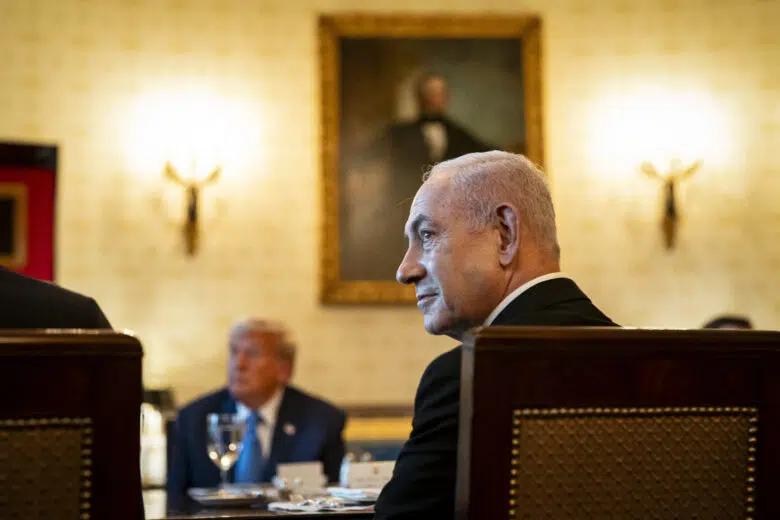
ROME — With Israeli Prime Minister Benjamin Netanyahu in Washington, the gears of Israel’s intelligence machine seem to be quietly turning once again. No, this is not just a diplomatic trip. It marks the beginning of a new chapter in an invisible war, an intelligence battle that could trigger yet another geopolitical earthquake in the Middle East.
While the world watches official protocols, hollow statements, and smiling photos of world leaders, a different kind of silent but ruthless war is taking shape on the ground.
For the latest news & views from every corner of the world, Worldcrunch Today is the only truly international newsletter. Sign up here.
Israel’s Mossad spy agency and its network of operatives, already embedded deep inside Iranian territory, are preparing for a new scenario. You won’t hear about it on global talk shows or catch a whiff of it in UN corridors. But the signs are there.
Netanyahu’s official visit, at such a pivotal moment in the rebalancing of Middle Eastern security, sends a clear and unmistakable message: the Iran file is far from closed. On the contrary, it has entered a new phase.
Shadow war
After 12 days of war between Iran and Israel, the dust has yet to fully settle. But what hangs over the region now is not peace; it is the calm before the storm. A shadow war is already underway, an intelligence operation whose goal is not only to destroy nuclear facilities or Iranian military bases but also something far more ambitious: to erode the regime’s strategic will from within, to psychologically wear down its command structure, and to drive cracks through the very core of its power.
With a track record of daring operations in the heart of Iran, the Mossad is once again moving its pieces into place. Sleeper cells are waking up. Advanced surveillance and communications technologies are being deployed. Agents trained for years for this exact moment are ready to carry out a plan that could, for the second time in a month, completely shift the balance.
The Gaza ceasefire may not be a gesture of peace but part of a broader strategy.
Meanwhile, what is happening in Gaza is anything but unrelated. Reliable sources speak of a two-month ceasefire between Netanyahu and Hamas, brokered by Qatar and Egypt under American pressure. Why now? Because global public opinion is increasingly hostile toward the Israeli government. Images of children buried under rubble have sparked a wave of worldwide condemnation. Yet Netanyahu, a political veteran hardened by decades of crises, may once again find a way to turn this sentiment to his advantage.
The Gaza ceasefire may not be a gesture of peace, but rather part of a broader strategy: to reduce media tension, regain international legitimacy by presenting a more “rational” face, and concentrate all resources on what Israel sees as the existential threat, the Islamic regime in Iran.

A blunt message
In this context, Netanyahu’s trip to Washington carries a blunt message. He wants U.S. President Donald Trump’s green light to strike Iran harder, more decisively and perhaps for the final time. For his part, Trump knows that Netanyahu can serve as his operational arm in the next phase of the “maximum pressure” policy. The partnership between Tel Aviv and Washington has grown stronger since the recent war, and now the time has come to plan the next strike.
Disrupting the inner workings of Iran’s security system, that is the dark art that has made Israel one of the most feared intelligence actors in the world.
Israel knows time is not on its side. Every day of waiting allows the “Ayatollah regime” to rebuild, while the diplomatic landscape grows more complicated. That is why its new strategy is not conventional warfare, but at a hidden war. This involves dismantling intelligence networks, neutralizing command centers, and above all, breaking the regime’s strategic confidence.
This time, the target may not be just sites in Fordow, Isfahan or Parchin. Perhaps the Mossad is no longer after explosions but collapse, destruction without smoke, an attack without detonation. Disrupting the inner workings of Iran’s security system, that is the dark art that has made Israel one of the most feared intelligence actors in the world.
Suspicious silence
The silence of the media, the suspicious sluggishness of Western analysts, and the global focus on other crises all point to one thing: The next attack may already be over before anyone realizes it has begun.
What is at stake is not just the fate of a regime, but the future of an entire region.
In all this, the Iranian people must remain more alert than ever. Because what is at stake is not just the fate of a regime, but the future of an entire region. A regime that once spread its revolution through terror and infiltration now risks becoming the victim of its own methods. History has a brutal sense of irony.
In the theater of international politics, silence does not always mean inaction. And a smile is not always a search for peace. In the shadow of this silence, a storm is gathering.